Yes. And also no. It depends entirely on what you’re measuring.
If you’re asking whether pole dancing takes effort to learn, the answer is yes. It uses your body in ways you probably haven’t used it before. Your body will ache. Your brain will work hard. Some things will feel impossible until, suddenly, they don’t.
If you’re asking whether you need to already be fit, strong, coordinated or experienced to start, the answer is no. Not even close.
Let’s break it down properly so you know exactly what you’re in for.
The Parts That Are Actually Hard
Pole has a learning curve and it’s worth being honest about that.
Grip. Your hands are doing something completely new. In the first few weeks, grip is usually the thing that limits you most. Not fitness, not strength. Just grip. That builds fast, but it does need time.
Using muscles differently. Pole works your upper body in a way that most everyday movement simply doesn’t. Even very fit people are surprised by how specific it is. The good news is that your body adapts quickly when you train consistently.
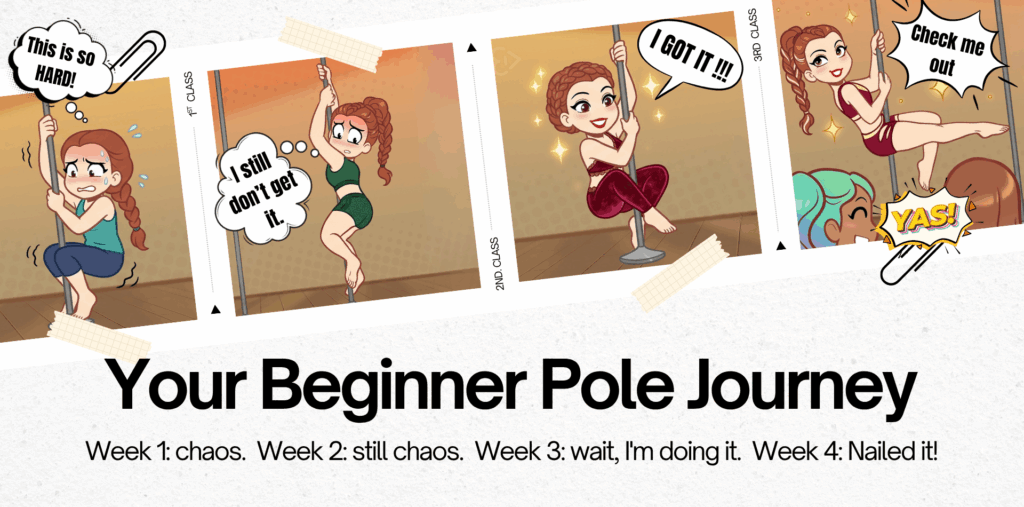
Patience with progress. You will not be spinning gracefully in week one. Some moves take weeks to click. That’s not a reflection of your ability. It’s just how technique-based skills work. The click always comes. It’s not a question of if, but when.
These are real challenges. They’re also exactly why pole is so satisfying. The things that take effort to learn are the ones that feel incredible once you’ve got them.
The Parts That Are Easier Than You Think
Here’s where most people are wrong about pole dancing for beginners.
The social fear, fitting in, being the least experienced person in the room: none of that is the problem you’re imagining. Beginner classes are full of people at the same stage as you. The atmosphere at a good studio is more “we’re all figuring this out together” than anything else. Also trust us, no one is watching. They’re all feeling the same fears as you and far too busy trying to figure out what they themselves need to do.
You also don’t need a fitness base to begin. Pole builds its own fitness. Strength, endurance, flexibility and coordination all develop through training. You don’t bring them to the door. You build them once you’re inside.
And you absolutely don’t need to be flexible. That one surprises people. Flexibility isn’t a prerequisite for pole. It’s something that improves as a happy side effect.
What You’ll Actually Learn in the First Few Weeks
If you’ve ever scrolled past a “beginner pole” video on Instagram and thought “there is no way I can do that as a beginner,” you’re not wrong. A lot of what gets posted as ‘beginner content’ is either someone doing moves that aren’t beginner and incorrectly labeling them as such, or a more experienced dancer making something look simpler than it is. It sets an unrealistic bar. A real beginner class looks nothing like that.
Week one covers the basics: how to hold the pole, how to walk around it, a few foundational moves. Nothing that requires existing skill. Everything broken down step by step.
By weeks six to eight, most beginners are surprised by how much has changed. The moves that felt completely out of reach start to land. Here’s a look at what most beginners can do in eight weeks if you want a realistic picture of early progress.
What Makes the Biggest Difference for Beginners
Consistency beats everything else at the beginner stage.
The students who progress fastest are not the ones who arrived most athletic. They’re the ones who showed up regularly, practised between classes, and didn’t give up after a wobbly week. They’re the ones who allow themselves to ‘stuff up’.
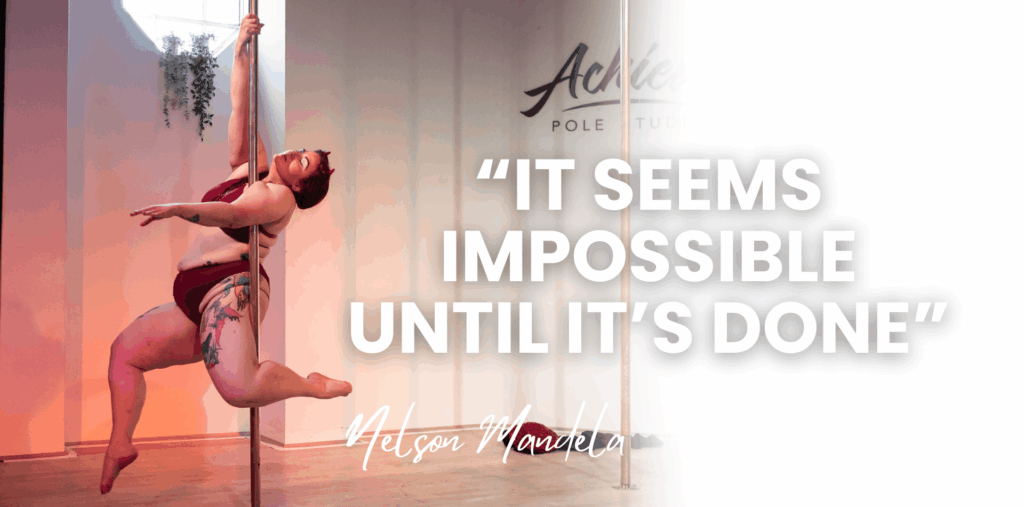
Pole rewards persistence in a way that few fitness activities do. The progress is visible and it compounds. What felt impossible in week two becomes warm-up material by month three. And that rush you feel when you get that move that the week before you struggled with is incredibly rewarding. There’s no other sport that will give you this. Especially as an adult. Pole is also the one sport that you can start later in life and excel at.
The Question Nobody Asks (But Should)
Most people ask “is pole dancing hard?” before they start. Very few ask “is it worth it?”
Worth asking. Because the honest answer to that one is the reason you’re here.
If you want the full picture before you book, this covers the most common questions people have before their first class. Worth a read.
What to Take Away
Pole dancing is challenging in specific ways: grip, new movement patterns, and the patience required to let technique develop. It is not hard because of fitness, strength, or experience. None of those are required.
The learning curve is real and it’s part of what makes pole genuinely rewarding. Most people who start say the same thing: they wish they had done it sooner.
If you’re ready to find out for yourself, our 4 Week Beginner Intro Pack is designed for complete beginners starting from scratch. Five beginner pole classes, a stretch and flex class, a beginner video library, and unlimited 24/7 Off Peak studio access.
Start here: 4 Week Beginner Intro Pack
Achieve Pole Studio x
Frequently Asked Questions:
FAQ 1. Do I need to be fit to start pole dancing?
Not at all. Pole dancing builds strength, endurance and coordination as you train, you don’t need to arrive with any of it. Most beginners start from zero fitness background.
FAQ 2. Will pole dancing hurt at first?
A little, especially your grip and forearms in the first few weeks. That’s normal and it fades quickly as your body adapts. It’s not an injury, it’s just new muscles waking up.
FAQ 3. How long does it take to see progress as a beginner?
Most students notice a real shift by weeks six to eight. Moves that felt impossible in week one start to click, especially with consistent practice between classes.
FAQ 4. Do I need to be flexible to start pole classes?
Not at all. Flexibility isn’t a prerequisite and it’s something that develops naturally the longer you train, not something you need to bring with you on day one.