Some weeks are heavy. Work is full on, sleep is patchy, and the last thing on your to-do list is “go and do something physical in front of other people.”
We’re not going to tell you pole dancing fixes that. It doesn’t, and we’re not qualified to say it does. What we can tell you is what we actually see and hear, week after week, from the people who train with us.
This isn’t a clinical claim. It’s just an honest look at what instructors and students notice about how movement affects mood, in case it’s useful to you right now.
What we notice in the studio
Instructors see the same pattern often enough to mention it. Someone walks in tight across the shoulders, distracted, checking their phone one last time before class starts. An hour later, they’re laughing at something that went wrong on the pole, properly present in the studio instead of wherever their head was before.
We can’t tell you why that happens in scientific terms. What we can tell you is that it happens a lot, and it’s one of the reasons instructors keep teaching.
It’s not about pushing through
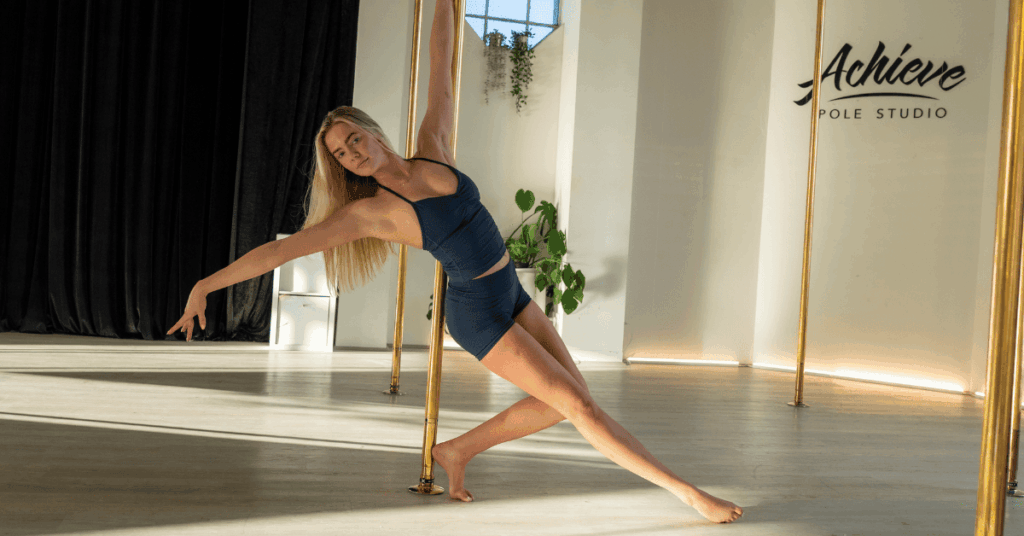
There’s a difference between movement that demands you switch off from everything else, and movement that demands you push harder than you have energy for. Pole asks for the first one, not the second.
You have to pay attention to your grip, your feet, where the pole actually is. That kind of focus doesn’t leave much room for replaying an email you sent three hours ago. It’s less about intensity and more about where your attention goes.
One of our students, Lauren, put it better than we could.
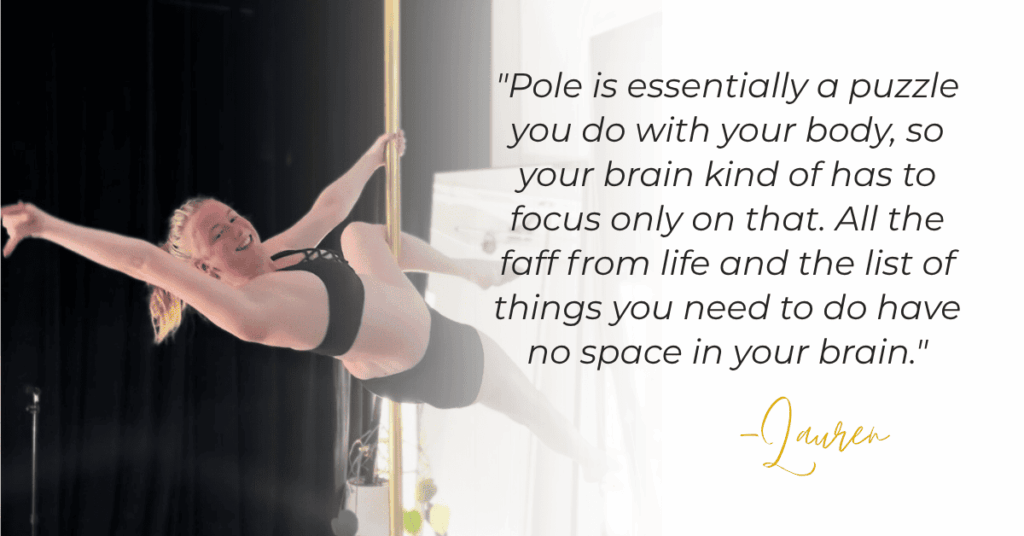
Nobody’s calling it meditation, but it’s easy to see why it can feel that way.
If you’ve ever wondered why time seems to move differently in a pole class, 10 Reasons Why Pole is Great for Mental Health goes into more of what students say about this.
Low pressure is not the same as low value
If you’re feeling stretched thin right now, the idea of starting something new can feel like one more thing to manage. That’s a fair concern, and we’re not going to pretend a single class solves burnout.
What a trial class actually asks of you is small. Come try some classes. See how you feel afterwards. No commitment, no pressure to be good at it straight away, no expectation that you’ll leave transformed.
Most people who come in on a hard week aren’t looking for a breakthrough. They’re looking for an hour where they’re not thinking about anything else. That’s a reasonable thing to want, and it doesn’t need to be dressed up as more than it is.
What students tell us
No one says it better than those who have experienced it.
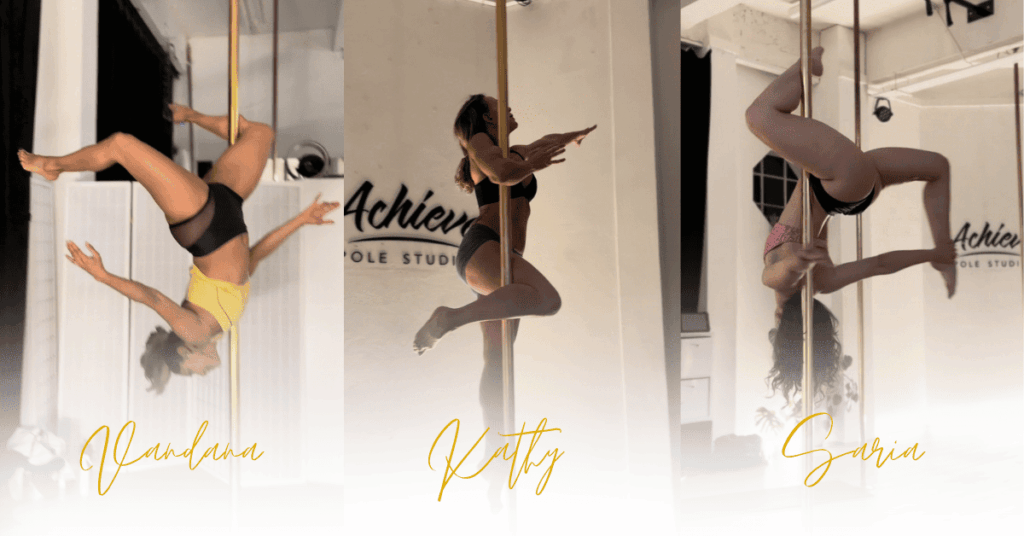
“Pole for me is a place to come and forget all the stuff that happens throughout the day and just come and focus on yourself and be in the moment.” Vandana
“When I come to pole I feel freedom. I feel I can escape from everyday problems and stress.” Kathy
“It’s hard to think about anything else when I’m hanging upside down 3ms in the air from one leg” Saria
You can see these students in action here “What’s one thing pole gives you when life gets too much”.
If today is one of the heavy days
If you’re reading this because today (or this week) has been a lot, we’re not going to tell you what to do about that. If you need real support, a friend, a GP, a mental health professional, those are the right places to start, not a pole class.
What we can offer is one thing: a low-pressure hour where you get to focus on something other than what’s weighing on you, surrounded by people who are genuinely glad you showed up.
A few honest takeaways:
– Movement won’t fix a hard week, but it can give you an hour away from it.
– You don’t need to feel strong or capable to try a class. Most people don’t, at first.
– Coming once is the only commitment a trial class actually asks of you.
Where to from here
If any of this sounds like what you need right now, the 4 Week Beginner Pack is a low-pressure way to find out how it feels for you, at your own pace, with no expectation attached.
Achieve Pole Studio x
Frequently Asked Questions
Is pole dancing a replacement for therapy or mental health treatment?
No, and we’d never suggest that. Movement can be a helpful part of how some people manage stress, but it isn’t a substitute for professional support. If you need that support, please reach out to a GP or mental health professional.
I'm exhausted and stressed. Will a pole class make that worse before it makes it better?
A trial class is genuinely low pressure. There’s no expectation to perform or push hard. Most people find it’s an hour of focus away from everything else, not an added drain.
What if I cry or get emotional in class?
It happens sometimes, and it’s never treated as a big deal. Our instructors have seen it before and the response is always kindness, never awkwardness. We’re here to support you every step of the way.
Do I need any experience or fitness background to try pole dancing for stress relief?
No. Most people who start with us have no pole or fitness background at all. The 4 Week Beginner Pack is built for complete beginners.