
Your diary is full before the week even starts. Work, catch ups, plans you actually want to keep, a dozen small things that all feel non negotiable. Pole training is often the one thing that quietly gets pushed to next week, then the week after that.
If that’s you right now, you’re not the only one wondering how anyone fits pole dancing around a busy schedule. So many pole dancers world wide are juggling exactly this.
Here’s what we actually know helps, from years of watching busy women build a training habit that survives a full calendar. By the end of this, you’ll know how often you really need to train, what to do when you miss a class, and how to keep progressing even in the weeks life takes over.
How to fit pole dancing around work, social plans, weekends away and everything else life throws at you

The usual advice is to protect one fixed time slot every week. For a lot of women, that works right up until it doesn’t. A late meeting, a friend visiting, a weekend away, and suddenly that slot is gone and so is the class.
Trying harder to defend one time slot rarely works. Having more than one option does. Achieve Anytime 24/7 Off-Peak access means training isn’t locked to a single class time. If your usual class options fall through, you can train off-peak whenever your week actually allows it, instead of losing the week altogether.
Your routine needs to bend, not you
Most class times work brilliantly until life doesn’t cooperate. The usual advice is to try harder to protect that one time slot. For busy women, that often doesn’t work, because the things competing for it are things you actually want to do too.
What actually works is a training schedule that can move when your week does, instead of one fixed slot you either make or lose.
How often should you actually be training?

This is one of the most common questions we get, and the honest answer is less than most people assume. One class a week is enough to make real progress, especially in the initial months. Two is where most consistent improvement happens.
What matters more than frequency is consistency, your body needs regular sessions to keep the pattern. A single class every fortnight makes each one feel like starting again. A steady one or two a week, even short ones, builds momentum that carries over.
What to do when you miss a class
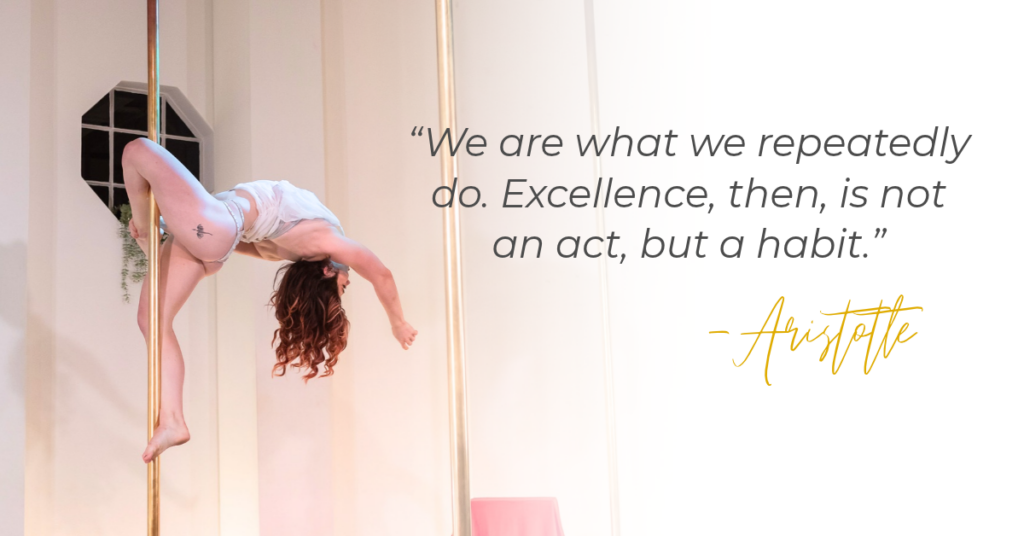
Missing a class is not a setback, and it doesn’t erase the progress you’ve already made. Strength and technique built over weeks of training don’t disappear because life got busy for a stretch.
The only thing that actually costs you progress is treating one missed class as a reason to give up on the week entirely. If your usual class is gone, an off-peak session, even a shorter one, keeps the habit alive without needing to catch up on everything at once.
How to practise pole dancing outside of class
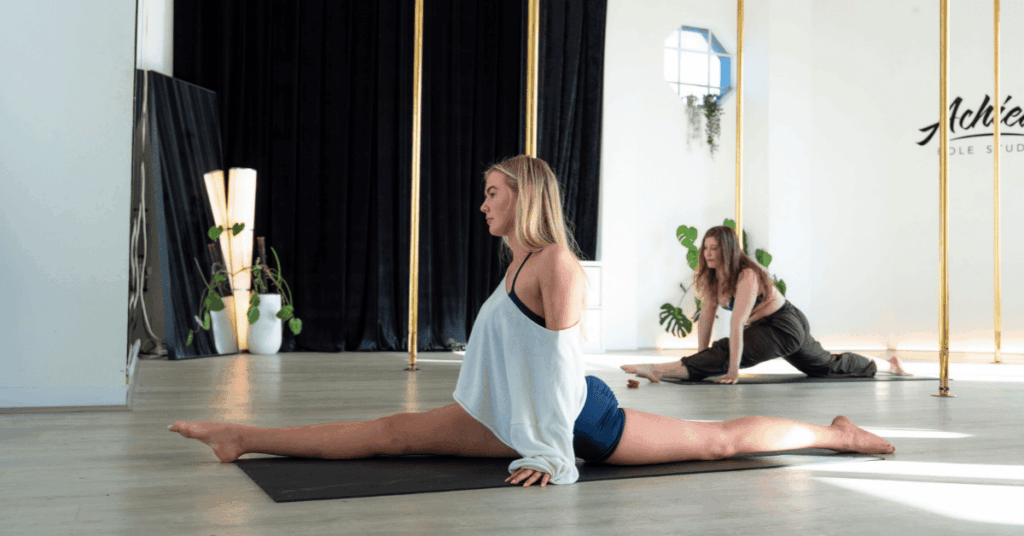
Class time is where you learn new skills. The time between classes is where they actually settle in. A short off-peak session to run through what you learned, even without an instructor watching, helps the movement stick.
Grip conditioning, stretching, and simply moving around the pole at your own pace all count. You don’t need a full class structure to make it worthwhile.
How to stay motivated when pole keeps sliding down your priority list
Motivation dips when training feels like one more obligation competing for a slot in an already full week. It tends to come back once the pressure to be perfectly consistent is removed.
Aim for training that fits around your week rather than a week that has to bend around training.
This isn’t about doing more
Some weeks won’t allow for extra training, and that’s fine. What matters is that the sessions you do plan actually happen, rather than quietly disappearing under everything else in a full week.
Some weeks that might mean one off-peak session instead of your usual two classes. That still counts. Progress doesn’t need a perfect week behind it to be real.
A few honest takeaways
– One or two sessions a week is genuinely enough to make progress. You don’t need to train constantly to improve.
– A missed class doesn’t undo your progress. It’s just part of a busy week, and what matters is what you do next.
– A fixed weekly time slot is the first thing to go when your calendar fills up. Flexible, off-peak access is built to survive that.
Where to from here
If your schedule has been the main thing standing between you and consistent training, Achieve Anytime 24/7 Off-Peak access is built exactly for that. Train whenever your week actually allows it, alongside your regular classes.
Achieve x
Frequently Asked Questions
How often should you do pole dancing to actually see progress?
One class a week is enough to make progress, and two is where most students notice steady improvement. Consistency matters more than frequency, so regular short sessions beat occasional long ones.
What should I do when I miss a pole class?
Don’t treat it as a setback. Your progress doesn’t disappear over one missed week. If you have flexible access, an off-peak session keeps things moving without needing to catch up all at once.
How can I practise pole dancing outside of class?
Off-peak studio time is ideal for this. Running through what you learned in class, working on grip and stretching, or simply moving around the pole at your own pace all help the skills settle in.
Is pole dancing realistic for busy women with unpredictable schedules?
Yes, absolutely. Most of our members are managing full schedules, and flexible options like 24/7 off-peak access exist specifically so training doesn’t depend on one fixed time slot every week.