You’ve thought about trying pole dancing. Maybe you watched a friend at a studio showcase, or you’ve scrolled past it on Instagram more times than you can count. Then you pushed that thought aside and told yourself you’d do it another time.
That “another time” has a way of becoming never. Not because you don’t want to try it. It’s usually because there’s a list running in your head of reasons you’re not ready: not fit enough, not flexible enough, too old, too uncoordinated, too worried about looking silly in front of people who already seem to know what they’re doing.
Here’s what we want you to know before we go any further. Every single person who has ever walked into a pole studio for the first time carried that exact same list.
This guide answers the questions almost everyone asks before their first class, so you can walk in knowing what to expect, with nothing left to wonder about.
DO YOU NEED TO BE FIT OR STRONG TO START?
No. Pole runs mostly on technique, not raw strength. Most beginners blame themselves for not being strong enough when the real issue is usually technique, or grip.
Here’s the part that surprises people. Strength from the gym doesn’t always transfer to pole, and it can actually work against you. A gym pull up trains you to bend your elbow and pull with your biceps. On a pole, that same habit makes you slide down instead of holding your position, because there’s nothing else holding your body in place.
A total beginner with no fitness background often picks up correct technique faster than someone very strong, simply because they have no old habit to unlearn. If you’ve been putting this off because you think you need to “get fit first,” you don’t. Read more in “I Wish I Knew I Didn’t Need to be Strong to Start Pole”
WHY DO I FIND IT HARD?
Pole asks your body to do things it has never had to do before, so of course it feels hard at first. Grip is pure physics: your skin needs enough friction against the pole, and that friction drops the moment your hands get warm or sweaty. No amount of strength fixes a slipping hand, and that’s true for everyone, not just beginners.
A lot of pole moves also rely on isometric holds, where your muscles work hard to keep you still rather than to move you. That’s different to most gym training, which is built around moving your body rather than holding it in place. Your body just needs time to learn a new skill, the same way any new skill takes practise before it starts to feel natural.
WILL YOU FEEL CLUMSY OR GET BRUISED IN YOUR FIRST FEW CLASSES?
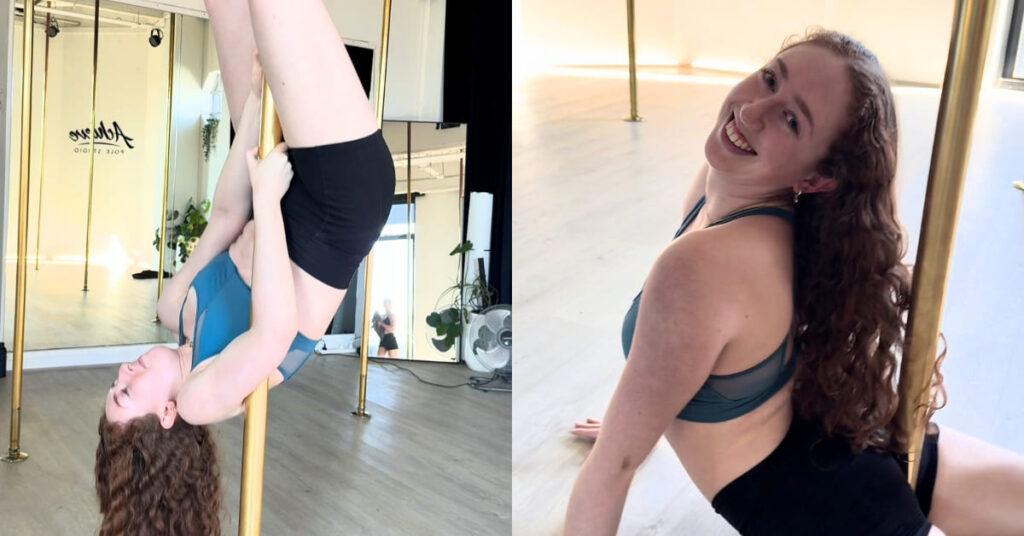
Some bruising is normal while your body learns to grip. It fades as your body adapts, and most students find it settles down within their first few weeks.
Feeling heavy or clumsy at the start isn’t a sign you’re not cut out for this. It generally takes four to five classes for your brain and body to start understanding the new movement patterns. Early classes are spent building those pathways, so everything feels harder than it should. That’s completely normal, not a red flag. For a full walkthrough of what your first session actually looks like, have a read of “10 Things To Expect from Your 1st Pole Class”
DO YOU NEED A DANCE OR GYMNASTICS BACKGROUND?
Not at all. Pole is its own discipline, with its own technique, and beginner classes are built from the ground up for people who have never done anything like it before. Flexibility isn’t a prerequisite either. It develops gradually, the same way strength does.
WHAT SHOULD YOU BRING TO YOUR FIRST CLASS?
Wear something that lets bare skin grip the pole. Shorts and a fitted top work best, since bare arms and legs help you hold on. Bring water, tie your hair back, and skip the moisturiser on your hands and legs on class day. Lotion sits on the skin and makes the pole slippery, and no amount of strength fixes a slipping hand.
Some studios start beginners in heels, others don’t, so it’s worth checking before you book in. At Achieve, our pole technique classes are barefoot, though we do wear heels in our Pole Dance classes. To start, you won’t need heels at all. You don’t need any special gear to try your first class either. Just turn up in something comfortable that bares your skin and you’re ready to go.
WHAT IF YOU FEEL SELF-CONSCIOUS OR KEEP COMPARING YOURSELF TO OTHERS?
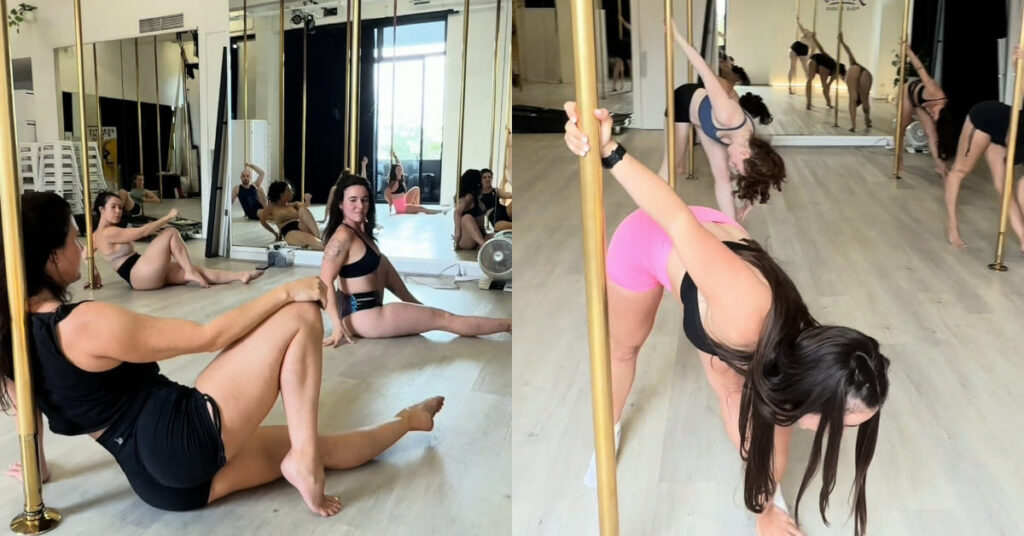
Almost everyone in that studio started exactly where you are now. A good class focuses on your own progress, not where you sit compared to the student next to you. Age doesn’t factor in the way people assume either. Women in their 40s, 50s and beyond are some of the most common beginners we see, and you can read more on that in “Am I Too Old to Start Pole Dancing?”
Your mind plays a bigger role than most people expect. If your head says you can’t before you’ve even tried, your body often holds back, and that hesitation is usually what causes the wobble, not a lack of ability. Commitment beats caution here, every time.
WHEN WILL I FEEL SEXY POLE DANCING?
There’s no set timeline for this, and it looks different for everyone. Some students feel it within their first few classes, just from moving in a way they never have before. For others it builds slowly, alongside strength and confidence, and shows up months in.
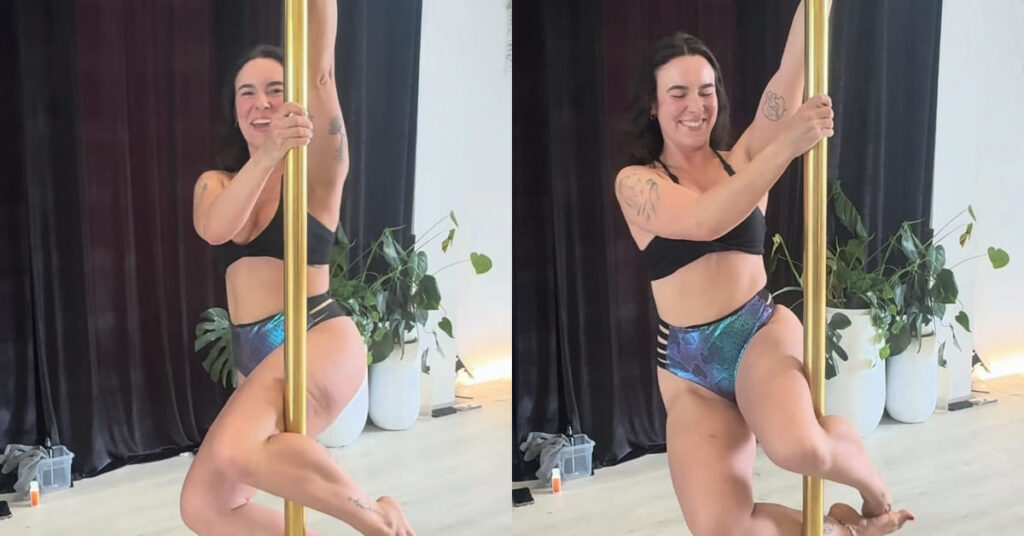
Feeling sexy on the pole isn’t something you perform for anyone else. It grows out of feeling strong, capable and comfortable in your own body. Plenty of our students say it’s less about how they look and more about how they feel, which tends to surprise people the most.
WHAT DOES THIS ALL MEAN FOR YOU?
You don’t need to be strong, flexible or experienced to start pole. Some bruising and awkwardness in the beginning is normal, and it passes. The biggest thing standing between you and your first class is usually a thought, not a fact.
If you’ve been telling yourself you’ll try it “another time,” this is your sign that the time is now.
Try your first classes here.
Achieve Pole Studio x
Frequently Asked Question
Do I need to be flexible to start pole dancing for beginners?
No, flexibility isn’t a prerequisite. Whether you can touch your toes or not, you can start pole. Strength and flexibility both build gradually with consistent classes.
Does pole dancing hurt?
You may notice some discomfort and bruising while your body learns to grip in the beginning. It settles down fast, and most students stop bruising altogether once their technique clicks.
How many times a week should I train pole as a beginner?
There’s no single right number. What matters most is consistency, so a couple of classes a week you can actually stick to will get you further than a big commitment you can’t keep up.
Am I too old to start pole dancing?
Not at all. Age isn’t a barrier here. We welcome beginners in their 40s, 50s and beyond, and it’s never too late to start something new.
Why do I find it hard when I start pole dancing?
It’s usually grip and unfamiliar muscle engagement, not a lack of strength. Pole asks your body to hold positions in new ways, so it takes a few classes for your body to learn what to do.
When will I feel sexy pole dancing?
There’s no set timeline, it’s different for everyone. It tends to grow out of feeling strong and comfortable in your own body rather than something you can rush.